


8 Best Contact Center Analytics Software (2026)


The CX intelligence
platform that's AI-native by design
Book a demoMost teams treat contact center analytics as call reporting. The best tools now turn every conversation into root-cause insight you can act on.
Quick Summary
This guide reviews the 8 best contact center analytics platforms of 2026, scored on AI depth, channel coverage, root-cause analysis, pricing, and verified G2 ratings. Our top pick is Chattermill, the AI-native customer experience intelligence platform that unifies contact center conversations with survey, review, and social feedback for AI-driven root-cause analysis. For pure conversation intelligence, CallMiner Eureka leads on enterprise speech analytics with acoustic and emotion detection, while NICE CXone is the strongest full-stack choice that bundles interaction analytics into an end-to-end contact center. Read on for detailed comparisons, features, pros and cons, 2026 pricing, and use cases.
Before we get into the detailed comparisons, here are our top three picks:
Why Listen To Us

Chattermill is a leading AI-native feedback analytics platform, trusted by enterprise CX teams at Uber, HelloFresh, and Tesco to make sense of customer feedback at scale. We build the technology that unifies contact center conversations with surveys, reviews, and social signals, so we work inside this category every day rather than reviewing it from the outside. That hands-on expertise across voice, digital, and survey feedback shapes the criteria and comparisons below. Explore our platform overview to see how this works in practice.
What Is Contact Center Analytics Software?
Contact center analytics software is technology that captures, analyzes, and surfaces insight from customer conversations across voice, chat, email, and other channels to improve service quality and business outcomes.
Traditional contact center reporting counted calls, measured queue times, and stopped there. It told you what happened but rarely why. Modern contact center analytics goes deeper, using AI and natural language processing to read the content of every interaction, score sentiment, and pinpoint the drivers behind satisfaction, churn, and repeat contacts.
For CX and operations leaders, that shift changes the job. Instead of reacting to volume spikes, teams can trace them to their source, quantify the impact on metrics like NPS and CSAT, and act before problems escalate. The opportunity is a contact center that generates strategy, not just tickets.
Types of Contact Center Analytics
Contact center analytics spans several disciplines. Most buyers need a combination rather than a single type.
- Speech analytics: Transcribes and analyzes voice calls to detect keywords, sentiment, and compliance risks across recorded interactions.
- Text and interaction analytics: Applies NLP to chats, emails, and tickets to surface themes, intent, and sentiment across written channels.
- Omnichannel analytics: Unifies voice and digital conversations into one view so patterns are visible across every touchpoint.
- Predictive analytics: Uses historical data to forecast volume, churn risk, and likely outcomes so teams can staff and intervene early.
- Self-service and desktop analytics: Measures IVR, chatbot, and agent-desktop behavior to reveal where automation helps or where customers get stuck.
Contact Center Analytics Metrics & KPIs to Track
Strong analytics is only useful if it maps to the metrics leaders are accountable for. Track these core KPIs.
- First Contact Resolution (FCR): The share of issues resolved in a single interaction, without callbacks or transfers.
- Average Handle Time (AHT): The average duration of an interaction, including talk, hold, and after-call work.
- CSAT: Customer Satisfaction score, usually captured by a short post-interaction survey.
- NPS: Net Promoter Score, measuring how likely customers are to recommend you.
- CES: Customer Effort Score, measuring how easy it was for a customer to get their issue resolved.
- Abandonment rate: The percentage of contacts that leave the queue before reaching an agent.
- SLA and service level: The percentage of contacts answered within a target time, against your agreed commitments.
8 Top Contact Center Analytics Tools: Head-to-Head Comparison
The table below compares all eight platforms on the factors that matter most to buyers. Ratings are verified as of 2026.
How We Evaluated These Tools
We scored each platform against seven criteria that matter specifically for contact center analytics buyers.
- AI and NLP depth: How advanced the underlying models are, and whether they score sentiment accurately on mixed, multi-topic conversations.
- Channel coverage and feedback unification: Whether the tool analyzes voice alone or unifies calls with chat, email, surveys, reviews, and social.
- Root-cause depth: Whether the platform explains why metrics move, not just what changed.
- Integration ease: How readily it connects to your CCaaS, CRM, and data stack without heavy engineering.
- Scalability: Whether it handles enterprise volumes and multiple languages reliably.
- Pricing transparency: How clearly pricing is published versus gated behind a sales conversation.
- User reviews and market validation: Verified G2 ratings and review counts as evidence of real-world performance.
1. Chattermill
What is Chattermill?
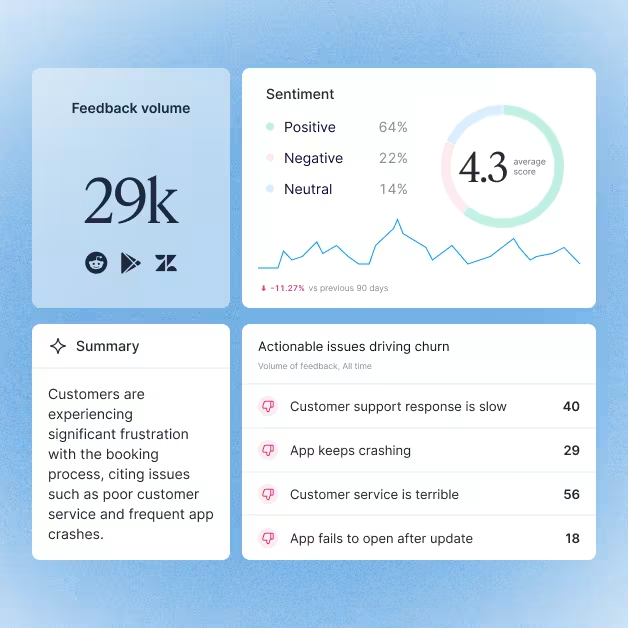
Chattermill is an AI-native customer experience intelligence platform that unifies contact center conversations with survey, review, and social feedback to power AI-driven root-cause analysis.
Where most tools in this list analyze conversations in isolation, Chattermill connects them to the wider voice of the customer. Its proprietary AI model, Lyra, applies generative AI and deep learning NLP to read feedback at scale, while Aspect-Based Sentiment Analysis (ABSA) scores sentiment per theme or aspect within a single piece of feedback, rather than assigning one blended score per comment. That precision preserves signal on messy, mixed-topic conversations where simpler tools lose it. The result is a clear line from a call driver to its impact on NPS, CSAT, and CES.
Features
- Lyra AI model: Purpose-built generative AI and deep learning NLP for customer experience intelligence, engineered for accuracy and trust.
- Aspect-Based Sentiment Analysis (ABSA): Scores sentiment per theme within a single comment for superior accuracy on multi-topic feedback.
- Unified feedback: Consolidates voice, chat, email, surveys, reviews, and social into one analyzable dataset.
- Broad coverage: Analyzes feedback in 100+ languages (50+ native) across 65+ feedback channels.
- MCP server: Lets teams query and act on feedback data directly inside AI agents. See the MCP server.
- Anomaly detection and alerts: Flags emerging issues automatically and measures their impact on business metrics.
2026 Pricing: Contact for pricing. Chattermill uses custom pricing, so plans require a sales conversation. Book a demo to scope a quote.
Pros
- Unifies contact center data with survey, review, and social feedback in one platform.
- ABSA delivers accurate sentiment on mixed, multi-topic conversations.
- Coverage across 100+ languages (50+ native) suits global operations.
- Root-cause analysis ties conversation drivers directly to NPS, CSAT, and CES.
Cons
- Custom pricing means no public entry price for quick budgeting.
- Built for teams unifying feedback at scale, so it is more than very small support desks need.
Who It's For: Enterprise CX, insights, and product teams that want to unify contact center conversations with wider feedback for AI root-cause analysis.
G2 Rating: Chattermill G2 Score: 4.4/5 (238 reviews).
2. CallMiner Eureka
What is CallMiner Eureka?
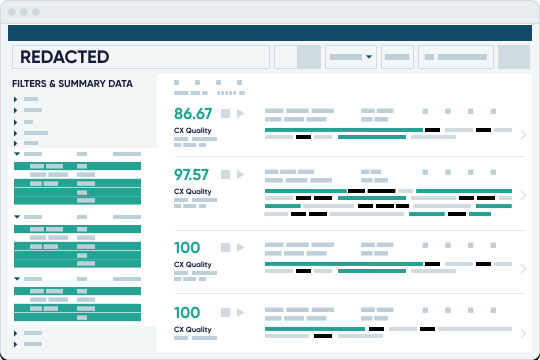
CallMiner Eureka is an enterprise conversation intelligence platform focused on deep speech analytics across large volumes of interactions.
CallMiner is a specialist in mining voice and digital conversations for meaning. Its AI speech analytics combines transcription with acoustic and emotion detection, so it reads not only what was said but how it was said. The platform supports both real-time and post-interaction analysis, and it scores 100% of interactions automatically rather than sampling.
Features
- Acoustic and emotion analysis: Detects tone, stress, and sentiment signals beyond the transcript.
- Real-time analytics: Surfaces guidance and alerts during live interactions.
- Automated 100% scoring: Evaluates every interaction rather than a manual sample.
- Multichannel capture: Analyzes voice, chat, email, social, and web conversations.
2026 Pricing: Enterprise pricing is custom, so a starting price requires a sales conversation with CallMiner.
Pros
- Deep, category-leading speech analytics with emotion detection.
- Scores every interaction automatically for complete coverage.
- Supports both real-time and post-interaction use cases.
Cons
- Focused on conversation intelligence rather than unifying survey and review feedback.
- Enterprise custom pricing can be a barrier for smaller teams.
Who It's For: Large enterprises that need best-in-class speech analytics and compliance-grade conversation intelligence.
G2 Rating: CallMiner G2 Score: 4.5/5 (223 reviews).
3. NICE CXone
What is NICE CXone?
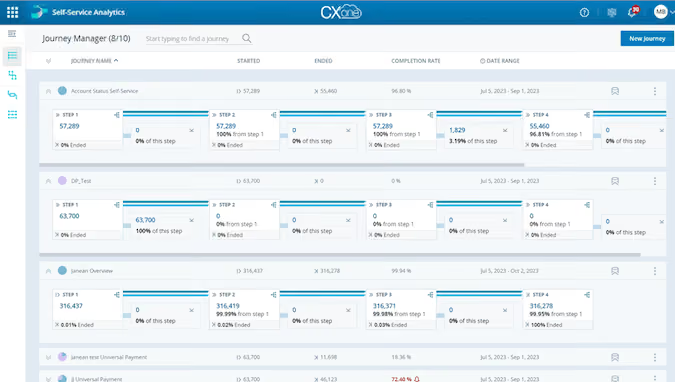
NICE CXone is a full-stack cloud contact center platform with interaction analytics built in alongside routing, workforce management, and quality management.
CXone appeals to teams that want their analytics and their contact center in one system. Its Enlighten AI engine applies machine-learning NLP to interactions, and because analytics sits inside the same platform as WFM and QM, insights connect directly to scheduling and coaching. That end-to-end scope is the main reason enterprises consolidate on it.
Features
- Enlighten AI: ML-based NLP for interaction analytics and automated quality scoring.
- End-to-end CCaaS: Combines routing, analytics, WFM, and QM in one platform.
- Omnichannel coverage: Analyzes voice, chat, email, social, and messaging.
- Automated quality management: Evaluates interactions to guide agent coaching.
2026 Pricing: Starts at $71/user/month for the Digital Agent (digital-first) tier; omnichannel plans begin around $110/user/month (NICE CXone Mpower pricing, G2), with higher tiers for advanced analytics and workforce optimization.
Pros
- One platform for contact center operations and analytics.
- Strong workforce and quality management integration.
- Large, well-established user base and ecosystem.
Cons
- Analytics is one module in a broad suite rather than a specialist focus.
- Full functionality can raise total cost and complexity.
Who It's For: Enterprises that want a single end-to-end contact center platform with analytics included.
G2 Rating: NICE CXone G2 Score: 4.3/5 (~1,730 reviews).
4. Observe.AI
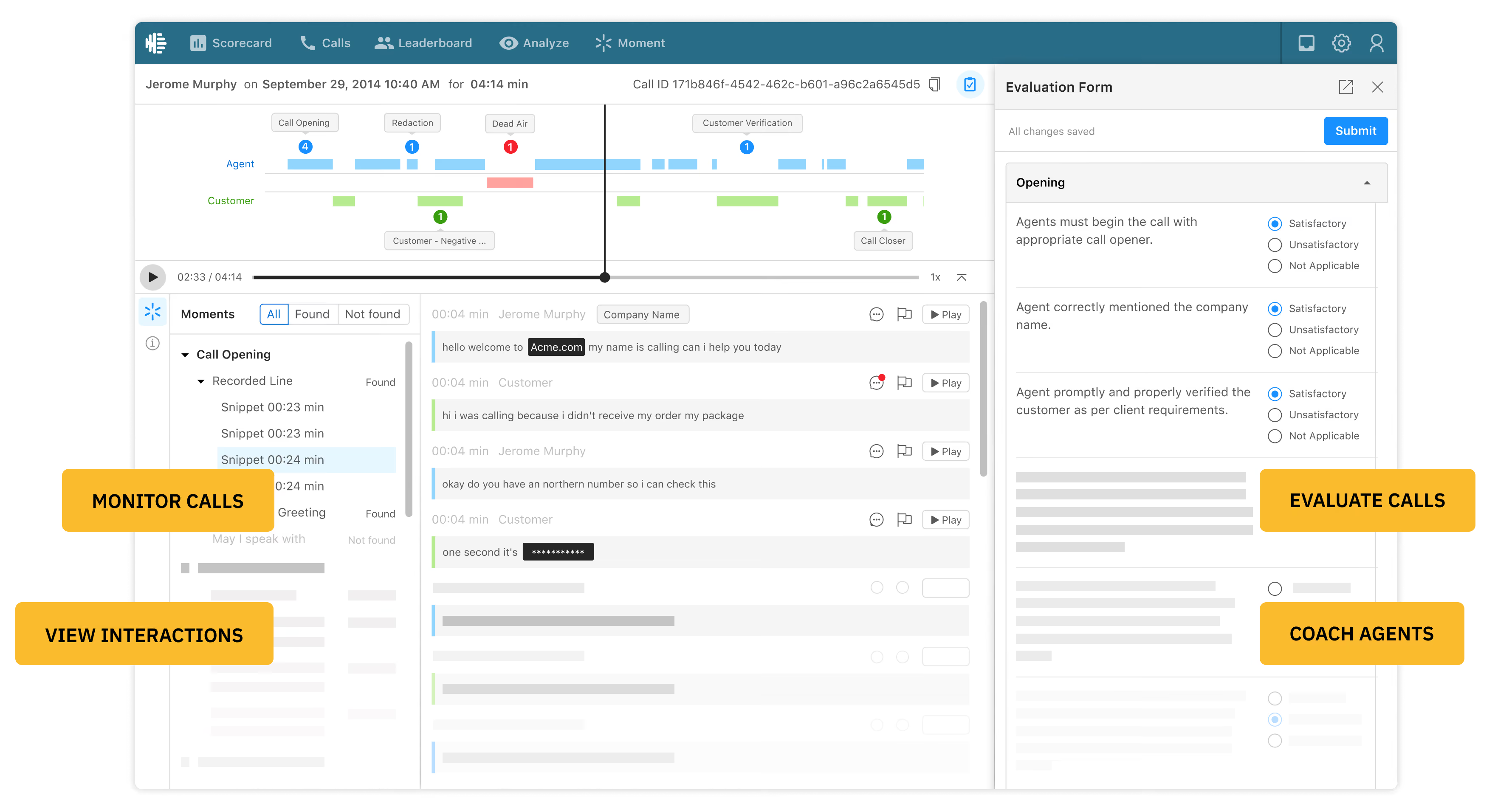
What is Observe.AI?
Observe.AI is an AI-native platform focused on agent performance optimization and real-time coaching.
Observe.AI is built around the agent. It applies LLM-based analysis to conversations as they happen, surfacing live guidance and automating quality assurance so supervisors spend less time reviewing calls manually. Its real-time focus makes it a strong fit for teams prioritizing agent enablement.
Features
- Real-time agent assist: Delivers live prompts and guidance during interactions.
- Automated QA: Scores interactions automatically to scale quality reviews.
- LLM-based analysis: Uses large language models to interpret conversations.
- Coaching workflows: Connects insights to targeted agent development.
2026 Pricing: Custom pricing, so plans require a sales conversation with Observe.AI.
Pros
- Strong real-time coaching and agent-assist capabilities.
- Highest G2 rating in this comparison.
- Modern LLM-based approach to conversation analysis.
Cons
- Channel coverage centers on voice and chat.
- Custom pricing with no public entry point.
Who It's For: Contact centers prioritizing agent performance, live coaching, and automated QA.
G2 Rating: Observe.AI G2 Score: 4.6/5 (238 reviews).
5. Calabrio ONE
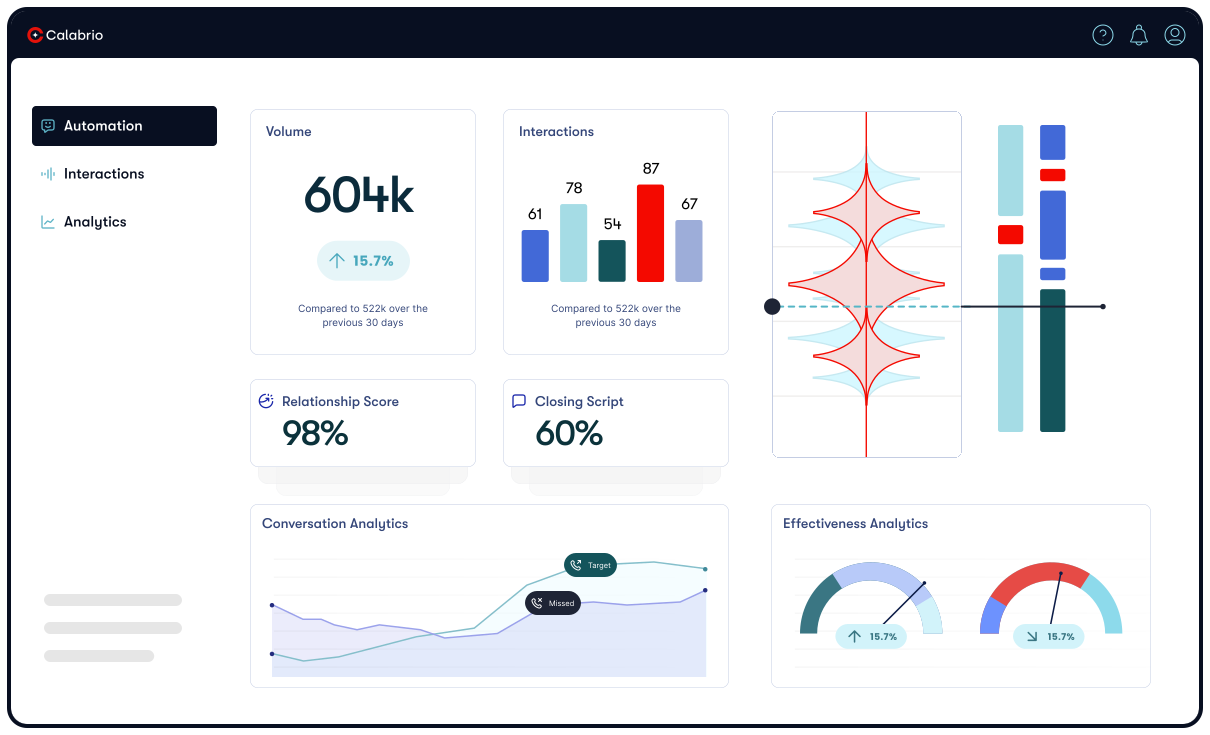
What is Calabrio ONE?
Calabrio ONE is a workforce optimization suite that combines analytics with workforce and quality management, now part of Verint.
Calabrio positions analytics as part of a broader WFO story. Its ML-based speech and sentiment analytics sit alongside WFM, QM, and desktop analytics, giving operations leaders one place to plan, evaluate, and improve. Desktop analytics is a notable strength, revealing how agents use tools during interactions.
Features
- Speech and sentiment analytics: ML-based analysis of voice, chat, and email.
- Desktop analytics: Tracks agent application use to find process friction.
- Workforce management: Forecasting and scheduling in the same suite.
- Quality management: Structured evaluation and coaching workflows.
2026 Pricing: Modular and custom, so pricing depends on selected components and requires a sales conversation.
Pros
- Combines WFM, QM, and analytics in one suite.
- Desktop analytics adds process-level visibility.
- Strong G2 rating and established WFO reputation.
Cons
- Analytics is one part of a workforce optimization suite.
- Modular pricing can complicate budgeting.
Who It's For: Operations teams that want workforce optimization and analytics together.
G2 Rating: Calabrio ONE G2 Score: 4.4/5 (~435 reviews on G2).
6. Verint
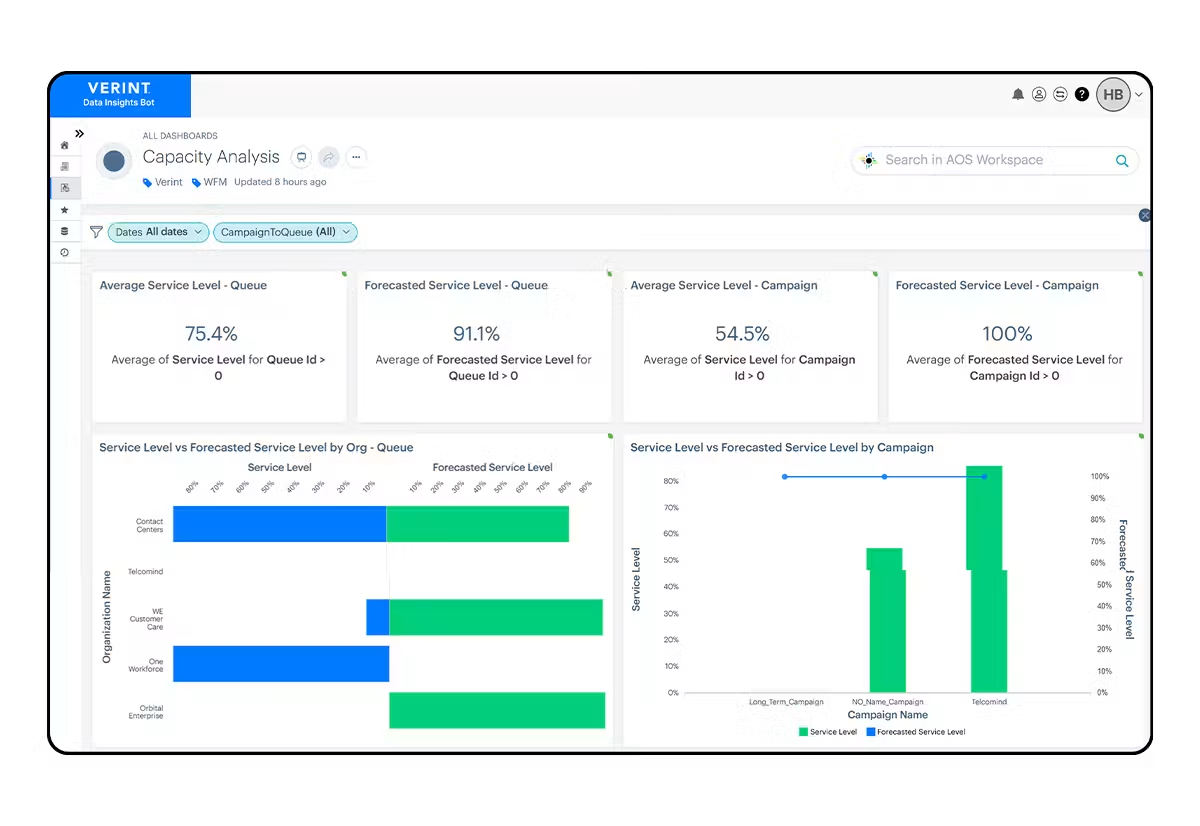
What is Verint?
Verint is an enterprise-scale platform for speech and text analytics and customer experience automation, with one of the broadest suites in the market.
Verint suits large organizations that want breadth. Its AI speech and text analytics sit within a wide portfolio that spans intelligent virtual agents, knowledge management, and workforce management. Verint also offers 100% automated quality assurance, evaluating every interaction rather than a sample.
Features
- Speech and text analytics: AI analysis across voice and digital channels.
- Broad automation suite: Includes IVA, knowledge management, and WFM.
- 100% automated QA: Evaluates every interaction automatically.
- Omnichannel coverage: Voice, chat, email, social, and messaging.
2026 Pricing: Enterprise pricing is custom, so a starting price requires a sales conversation with Verint.
Pros
- One of the broadest CX and analytics suites available.
- 100% automated quality assurance at scale.
- Strong fit for complex enterprise requirements.
Cons
- Breadth can mean more complexity than analytics-focused buyers need.
- Enterprise custom pricing with no public entry point.
Who It's For: Large enterprises seeking a broad, integrated CX automation and analytics suite.
G2 Rating: Verint G2 Score: 4.4/5.
7. Genesys Cloud CX
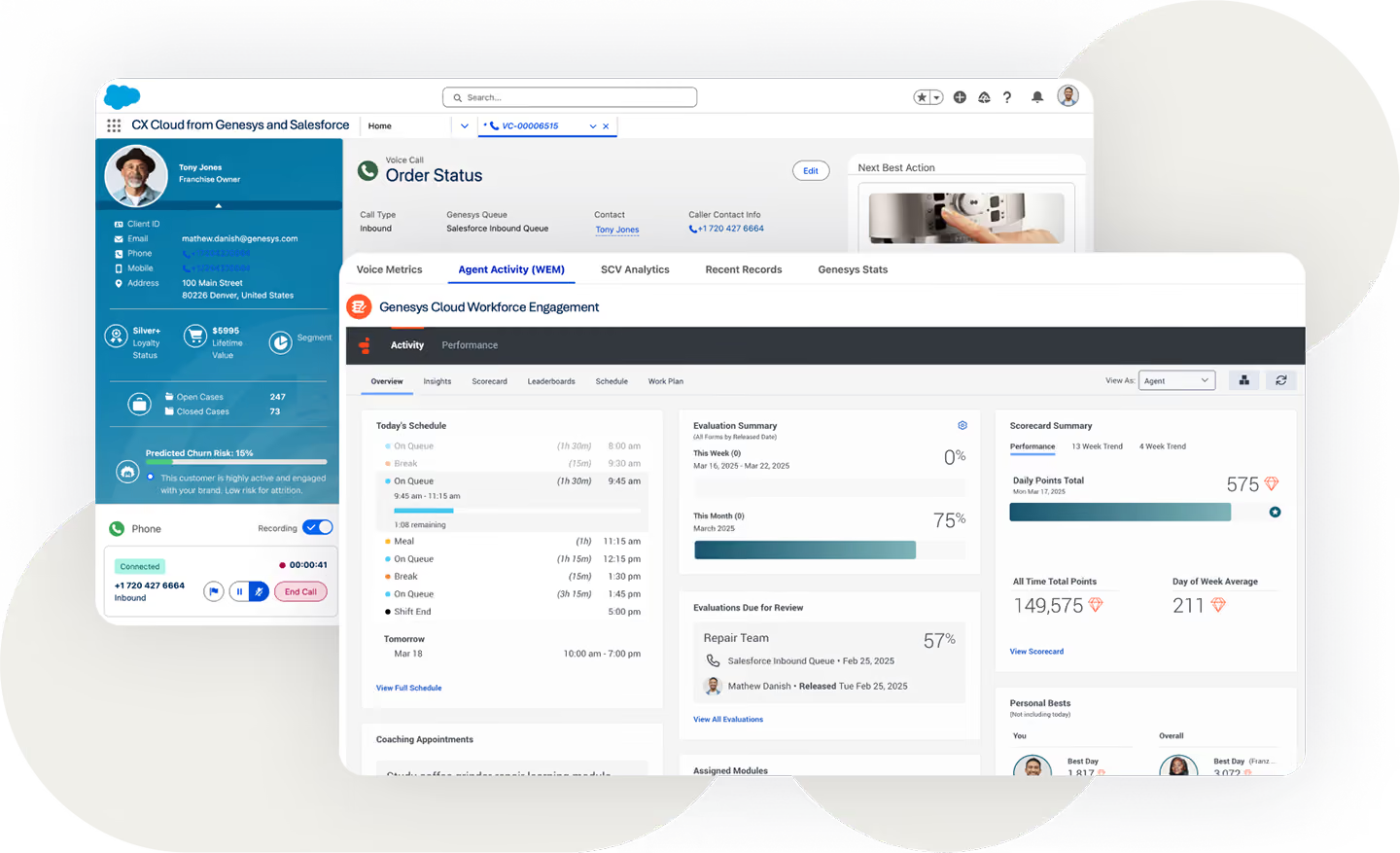
What is Genesys Cloud CX?
Genesys Cloud CX is a leading cloud contact center platform with native analytics and predictive capabilities built in.
Genesys is a top CCaaS choice, and its analytics live inside that platform. Genesys AI powers predictive analytics and predictive routing, so insight feeds directly into how contacts are handled. For teams already standardizing on Genesys, native analytics avoids adding a separate tool.
Features
- Genesys AI: Powers analytics and predictive routing.
- Predictive analytics: Forecasts outcomes and routes contacts accordingly.
- Native analytics: Reporting built into the contact center platform.
- Omnichannel coverage: Voice, chat, email, messaging, and social.
2026 Pricing: Starts at $75/user/month as of 2026, with tiers scaling by channel and feature set.
Pros
- Analytics and predictive routing native to a leading CCaaS.
- Strong omnichannel handling and ecosystem.
- Published entry pricing aids budgeting.
Cons
- Analytics is part of the CCaaS rather than a specialist product.
- Advanced feedback unification requires additional tooling.
Who It's For: Teams standardizing on a leading CCaaS that want native analytics and predictive routing.
G2 Rating: Genesys Cloud CX G2 Score: 4.4/5 (1,520 reviews).
8. Five9
What is Five9?
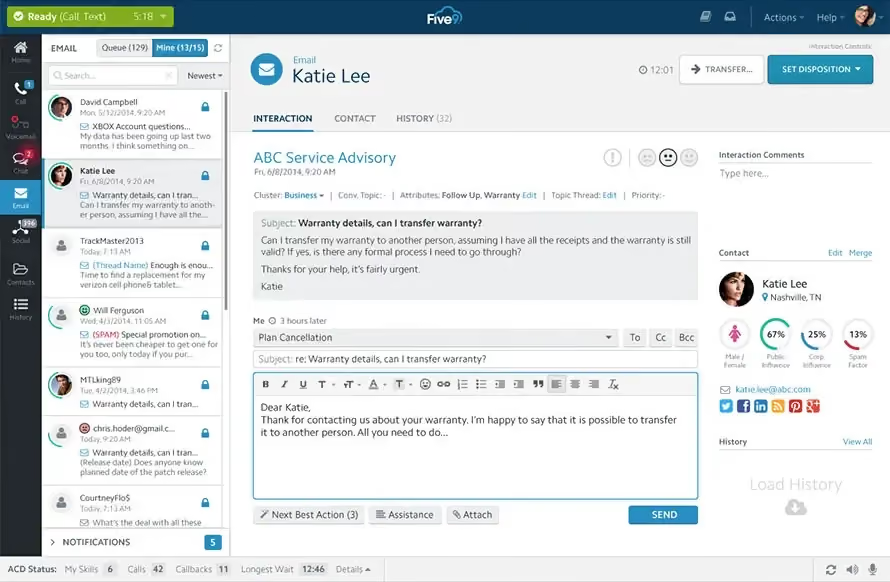
Five9 is a cloud contact center platform with integrated analytics aimed at mid-market teams.
Five9 balances capability with practicality. Its AI-based analytics and workforce optimization sit inside a cloud contact center that includes intelligent virtual agents, giving mid-market teams useful insight without enterprise complexity. It is a pragmatic option for organizations scaling from basic reporting.
Features
- AI-based analytics: Practical reporting and insight across interactions.
- Intelligent virtual agents: Automates common contact types.
- Workforce optimization: Scheduling and quality tools in the platform.
- Multichannel coverage: Voice, chat, email, and social.
2026 Pricing: Starts at $119/user/month (Digital plan) as of 2026; voice-inclusive Core plans begin around $159/user/month (CloudTalk, 2026), scaling by seats and features.
Pros
- Practical, accessible analytics for mid-market teams.
- Integrated IVA and workforce optimization.
- Published starting price supports budgeting.
Cons
- Lowest G2 rating in this comparison.
- Analytics depth trails specialist platforms.
Who It's For: Mid-market contact centers that want integrated analytics without enterprise overhead.
G2 Rating: Five9 G2 Score: 4.1/5 (~625 reviews on G2).
Frequently Asked Questions
What is the best contact center analytics software?
Chattermill is the best contact center analytics software for teams that want to unify contact center data with survey and review feedback for AI root-cause analysis. It connects conversation drivers to NPS, CSAT, and CES so leaders can act on why metrics move.
What is the best contact center software?
For a full-stack contact center, NICE CXone and Genesys Cloud CX lead, bundling routing, workforce management, and analytics in one platform. The best choice depends on whether you prioritize an all-in-one CCaaS or specialist analytics depth.
What are the most important contact center analytics metrics?
The most important metrics are First Contact Resolution (FCR), Average Handle Time (AHT), CSAT, NPS, CES, abandonment rate, and service level against SLA. Together they show efficiency, quality, and customer sentiment.
How does AI improve contact center analytics?
AI reads the content of every interaction, scores sentiment, and identifies root causes at a scale manual review cannot match. Chattermill's Aspect-Based Sentiment Analysis, for example, scores sentiment per theme within a single comment for accuracy on mixed feedback.
How much does contact center analytics software cost?
Pricing ranges from published rates such as NICE CXone from $71/user/month and Genesys Cloud CX from $75/user/month, to custom enterprise quotes. Platforms like Chattermill, CallMiner, and Verint use custom pricing that requires a sales conversation.
What's the difference between speech analytics and interaction analytics?
Speech analytics analyzes voice calls through transcription and acoustic signals, while interaction analytics applies NLP across written channels like chat, email, and tickets. Omnichannel platforms combine both for a complete view.
What software do most call centers use?
Many call centers run on established CCaaS platforms like NICE CXone, Genesys Cloud CX, and Five9, then add analytics for deeper insight. Teams that want to unify contact center data with wider feedback often layer on Chattermill.
The Bottom Line
Contact center analytics has moved from counting calls to explaining them. Every tool in this guide can help, but they solve different problems: specialist speech analytics, full-stack CCaaS, or unified feedback analytics across every channel.
For teams that want to connect contact center conversations to surveys, reviews, and social feedback and trace metrics to their root cause, Chattermill is our top recommendation. As an AI-native CXI platform, it pairs the Lyra model and Aspect-Based Sentiment Analysis with coverage across 100+ languages (50+ native) and 65+ feedback channels, turning conversations into decisions. See how teams cut effort in our guides to the best CX analytics tools, the best voice of customer tools, and how to reduce contact center call volume.
Ready to see it on your own data? Book a demo.

See Chattermill in action on your own feedback
Book a demo


